A good blender is one that handles the foods you make most often, in portions that suit your household, without being a chore to store or clean. For many kitchens, a countertop model is the most flexible all-rounder. But if you mainly make one smoothie at a time, want to puree soup in its pot, or rarely blend at all, a personal or immersion blender may be a better fit.
The useful question isn’t simply which blender has the biggest motor or the most buttons. Start with your typical batch, ingredients, counter space, and willingness to wash a large jar. Then check the exact model’s limits and instructions—especially for hot food.
Key Takeaways
- Choose a full-size countertop blender for varied recipes and larger batches, a personal blender for single servings, or an immersion blender for blending directly in a suitable container.
- Match jar size to what you actually make; the biggest capacity isn’t automatically the most practical.
- Don’t choose by wattage or presets alone. Check controls, cleanup, replacement parts, warranty, and model-specific instructions.
- Confirm the manual allows hot ingredients before blending soup in any appliance.
Featured image: “Blender” by cookbookman17 (Flickr, CC BY 2.0); resized and padded. Illustrative stock image; no product testing is implied.
What makes a blender good?
A good blender handles your regular recipes in useful portions and is manageable to clean and store. Ice drinks, large batches, pot-side purees, and single servings all call for different sizes and designs.
High wattage or a long accessory list won’t help if the jar doesn’t suit your portions or cabinet space. Compare specifications against your routine, not an imaginary universal winner.
Which type of blender fits your kitchen?
The three common choices solve different problems. Hamilton Beach’s lineup, for example, includes personal/travel containers of 14 and 20 ounces and larger jars of 32, 40, 48, and 56 ounces. These are examples from one manufacturer, not standard sizes; check the exact jar and fill guidance (Hamilton Beach blender lineup). The manufacturer lists its 58163 model with a 40-ounce glass jar and claims that jar is designed for hot liquids, but that single model detail should not be generalized to other blenders (model 58163 specifications). The operating manual was not available for independent review here, so consult it before using any blender with hot contents.
| Type | A good fit when you… | Main trade-off |
|---|---|---|
| Full-size countertop | Make varied recipes or larger batches | Takes space; jar may feel cumbersome for small portions |
| Personal blender | Usually make one drink at a time | Limited batch size; cup and blade assembly may need separate cleaning |
| Immersion blender | Want to blend in a suitable bowl, glass, or pan | You hold and move the wand; performance varies by model |
| Blender with attachments | Will regularly use the included chopper, whisk, or food-prep parts | More pieces to store and wash |
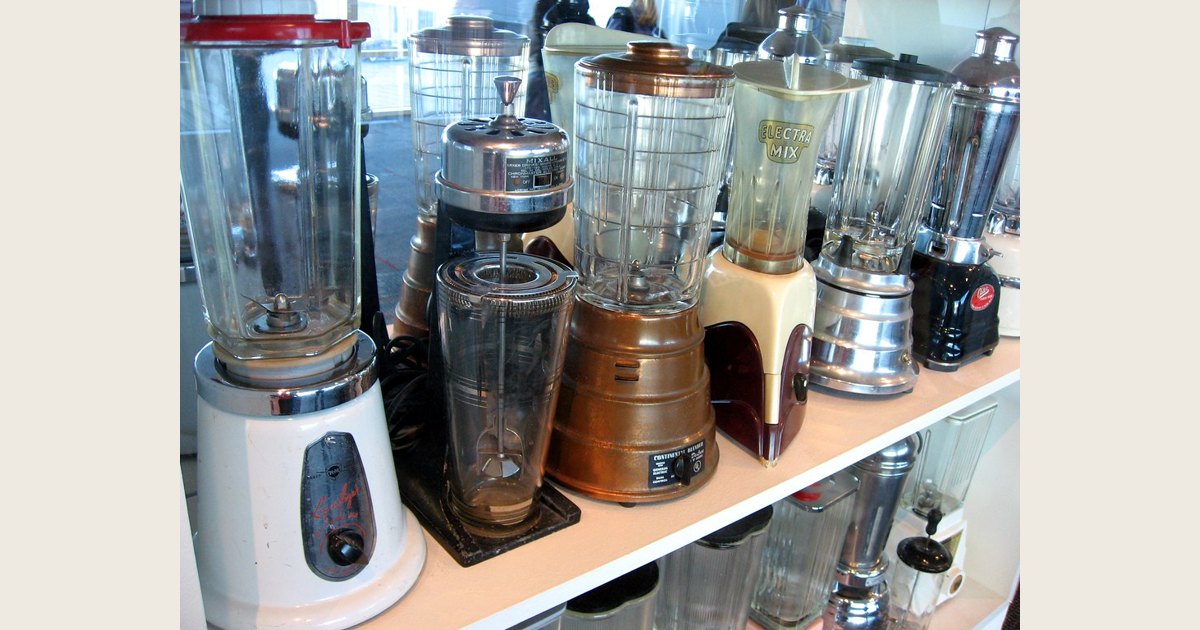
Different blender designs take up different amounts of room. Photo: “blender blender blender blender” by miss karen (Flickr, CC BY 2.0); resized and padded. Illustrative stock image; no product testing is implied.
A countertop jar suits changing recipes and larger quantities, but check its footprint, cabinet clearance, and weight when full. A personal blender keeps single portions compact; check its maker’s guidance for ice and frozen ingredients.
An immersion blender mixes in a vessel and can avoid transferring food to a separate jar. Hamilton Beach describes its hand blenders as tools for blending, mixing, whipping, chopping, and pureeing directly in a glass, bowl, or pan; some models include a whisk or chopper (Hamilton Beach hand blenders). Confirm allowed containers and attachments in the exact model’s manual.
Match the blender to what you make
Before comparing models, list three usual tasks, with portions and ingredients. “One smoothie before work” or “two frozen-fruit drinks” is more useful than simply “smoothies.” This helps rule out appliances whose capacity or format doesn’t fit.
- Mostly single drinks: Look at personal models if their cups hold the portion you actually drink. Check how the blade assembly comes off and whether the drinking lid is included; don’t assume every cup is designed for transport.
- Several servings or varied recipes: Compare full-size jars by the amount you usually blend, not just the maximum number printed on the box. Leave room according to the manual, and check that the container is comfortable to lift, pour from, and wash.
- Soup and soft cooked vegetables: An immersion blender may save a transfer step when used in a suitable pot. If you want a countertop model, verify its directions for hot food, jar, lid, and fill limit before buying.
- Ice or frozen ingredients: Confirm the manufacturer identifies the exact model for that use. A general “blender” label or impressive motor number alone doesn’t establish how a model should be loaded.
- Chopping or whisking: Decide whether you will use these tasks often enough to justify accessories. If you only need occasional chopping, compare the accessory’s capacity and cleaning steps with the space it adds.
A quick size example
Suppose your usual two-glass smoothie is one banana, 1 cup yogurt, ½ cup milk, and 1 cup frozen berries. Hamilton Beach lists examples of a 14-ounce personal jar and 48-ounce full-size jars, but those label capacities don’t establish the usable batch limit. Measure the recipe you actually make against the model’s fill marks and manual; confirm frozen berries are allowed. A personal cup may mean splitting the recipe, while a countertop jar takes more room to store and wash. This is a capacity comparison, not a tested recipe or performance claim.
Measure the storage spot, including clearance under cabinets. Consider whether you can easily lift out a stored blender or reach the controls and remove the jar if it stays on the counter.
Which features are worth checking?
Check the details that affect your everyday use:
- Usable capacity: Compare the jar’s marked capacity with its fill limits and the portions you make. A large maximum volume does not show whether it handles your smallest batch well.
- Controls and lid: Pick controls you can operate easily. Check how the lid locks and whether it has a feed opening; presets don’t replace the manual’s directions.
- Cleanup and parts: Check which pieces are dishwasher-safe, what can be removed, and whether replacement jars or blades are available. Follow the model’s care guide.
- Footprint and handling: Measure the base and the height with the jar or lid in place, including under-cabinet clearance. Consider the full jar’s weight and handle when pouring.
- Warranty and noise: Read warranty terms and exclusions. If noise matters in your household, compare manufacturer-provided information and think about when you’ll blend.
Wattage is one specification, not a complete measure of suitability. A model’s listed use, batch range, controls, and care instructions are more useful than assuming extra power or presets guarantee a better result.
Can you blend hot soup in a blender?
Only if the exact model’s instructions allow it, and only as directed. For example, Hamilton Beach says the 40-ounce glass jar on its model 58163 blender is designed for extreme temperatures and hot liquids. That product claim is model-specific; it is not operating guidance for filling, venting, or blending hot soup. The actual manual was not retrievable for review here. Hamilton Beach directs owners to locate documentation by model number through its Use and Care page. Check that guide for hot-liquid instructions and limits before blending. If you can’t verify that your model permits hot contents, let the soup cool and use a method the manual allows. The same caution applies to immersion blenders and the vessel you use.
A practical shortlist before you buy
- Write down three real jobs. Include batch size and whether you use ice, frozen food, or hot ingredients.
- Pick a format. Match a full-size jar, personal cup, or immersion wand to those jobs.
- Check fit and batch range. Measure your storage spot and compare portions with the manufacturer’s stated minimum and maximum loads.
- Find the manual before checkout. Confirm the permitted ingredients, hot-food precautions, attachments, cleaning steps, and troubleshooting for the exact model. Hamilton Beach’s documentation search requires the model number; other brands may provide a model-specific manual on the product page.
- Compare long-term convenience. Check replacement parts, warranty terms, and the pieces you’ll need to wash and store.
If two options meet your needs, favor the one with a suitable batch range, clear documentation, and manageable cleanup over features you won’t use.
Common blender frustrations and what to check
The mixture stays chunky. Check the batch size, ingredients, loading order, and speed against the model’s operating guide. If the manual allows it, try a smaller batch. Before opening the lid, scraping, or inserting anything into the jar, switch the appliance off and unplug it; use only a tamper specifically approved for that model, following its instructions. The manufacturer’s public manual lookup asks owners to search by model number, but its available page does not provide the operating directions. Retrieve the actual guide before troubleshooting.
It struggles with frozen food. Don’t keep restarting a batch that stalls. Check the manual for permitted ingredients, quantities, and preparation. If you often blend frozen ingredients, shortlist a model whose manufacturer explicitly lists that use.
Cleanup puts you off. Use the exact model’s cleaning directions. Before handling blades or removable parts, switch off and unplug the appliance; never immerse a motor base unless its instructions explicitly allow it. The manual—not a general product listing—should specify what can be removed or washed.
It stops during blending. Switch off and unplug it. Consult the model’s manual for any overload, reset, or cooling procedure before using it again; don’t guess at a recovery method.
Quick answers
Is a higher-watt blender always better?
No. Wattage alone doesn’t tell you whether the model suits your portions, ingredients, preferred controls, or cleaning routine. Check the exact model’s stated uses and operating limits.
Is an immersion blender better than a countertop blender for soup?
It can be more convenient for blending in a suitable pot because it avoids pouring the soup into a separate jar. It isn’t automatically the right choice for every soup or container; follow the specific appliance’s hot-food instructions.
What size blender should I get?
Choose capacity based on your normal batch, not the largest quantity you might make once. Compare the usable fill markings and the manufacturer’s minimum and maximum guidance, then consider how easy the full jar is to handle and clean.
The bottom line
Choose a blender for your real recipes: countertop for varied jobs and larger batches, personal for single servings, or immersion for blending in a suitable vessel. Check the exact model’s capacity, cleaning, parts, warranty, and food-use instructions—especially for hot liquids. This is a research-based guide, not a hands-on product test; confirm current details with the manufacturer.