The De’Longhi Stilosa EC260BK is a manual espresso machine for people who want to prepare espresso and milk drinks themselves, without stepping up to a more automated setup. It includes single- and double-espresso filters, a tamper, measuring spoon, and manual milk frother, but no grinder is listed in the box. That makes it a reasonable starter option if you’re comfortable learning a hands-on routine and planning for coffee separately—not a one-touch shortcut or a complete bean-to-cup kit.
This assessment is based on De’Longhi’s product information and support materials, not hands-on testing. The manufacturer lists a 15-bar pump, stainless-steel boiler, and two-level cup holder; those specs don’t establish the taste or performance you’ll get at home. (De’Longhi’s Stilosa product page)
Cover photo: “Espresso machine” by JMacPherson, used under CC BY 2.0. Resized illustrative stock—not a photo of the Stilosa and not evidence of product testing.
Key Takeaways
- The EC260BK is a manual machine with a portafilter, two espresso filters, and a manual milk frother.
- The single-shot filter is suitable for ESE pods; this does not establish compatibility with proprietary capsules.
- You stop the coffee flow manually. After frothing milk, the instructions say to cool the boiler before brewing again.
What the Stilosa includes—and what it doesn’t
De’Longhi lists the black EC260BK as a one-drink manual espresso machine. In the box are the machine, portafilter, tamper, a filter for single espresso, a filter for double espresso, a measuring spoon, and an instruction manual and quick-start guide. The product description also identifies a manual milk frother and two-level cup holder. (De’Longhi)
Those parts cover the basics for loading coffee into a portafilter and preparing espresso drinks, but the listed accessories do not include a coffee grinder. You can make a lower-cost start with suitable pre-ground espresso coffee; grinding fresh adds equipment and another step. If buying a grinder, look for one intended to grind finely and consistently for espresso rather than assuming any coffee grinder will do. Counter and Kettle’s guide to choosing grind sizes for common brew methods explains why grind needs to match the brewing method.
The product page calls the design compact, but it doesn’t provide external dimensions or water-tank capacity. The manual says cups up to 4.21 inches (10.7 cm) tall can be used after removing the drip-tray assembly; measure your counter and shelf separately before buying. (EC235–260 instructions)
Pros and tradeoffs at a glance
| What may suit you | What to weigh before buying |
|---|---|
| The single-shot filter is documented as suitable for ESE pods. | ESE soft pods are not the same as proprietary rigid capsules; don’t assume capsule compatibility. |
| The two-level cup holder accommodates varied cup sizes, and tall cups up to 4.21 inches fit with the drip-tray assembly removed. | You stop the shot manually and need to follow the manual’s boiler-cooling procedure before brewing after frothing milk. |
| The included manual frother supports milk drinks. | No grinder is listed; machine dimensions and tank capacity are not provided on the product page. |
These are documented features and operating tradeoffs, not test results. De’Longhi describes the machine as compact and says the stainless-steel boiler is designed for durability; that marketing language does not predict the lifespan of an individual unit. (Product details; EC235–260 instructions)
An ESE pod can simplify the coffee-loading step if you prefer portioned coffee: the instructions identify filter C3 (one shot) as suitable, and show placing the pod in that filter and centering it. The document does not say that Nespresso-style or other proprietary capsules fit. Check the pod packaging for ESE compatibility and use the manufacturer’s filter instructions; do not force a capsule into the portafilter. (EC235–260 instructions)
For traditional ground coffee, use the single- or double-shot filter and prepare it as shown in the manual. Once brewing, watch the cup and stop the flow using the selector; it is not a set-and-forget timed shot. If you steam milk first, pause before making coffee again: De’Longhi’s documented procedure has you discharge water to cool the boiler until the READY light goes off, then return to ON. Follow that sequence in the manual rather than improvising. (EC235–260 instructions)
Counter and Kettle’s espresso machine descaling guide can help you understand the general maintenance task, but use the Stilosa manual for its actual steps and timing.
What using a manual machine means
The Stilosa puts more of the drink-making routine in your hands: prepare coffee for the portafilter, lock it into place, monitor the shot, and use the frother separately for milk drinks. It asks for more attention than an automatic machine.
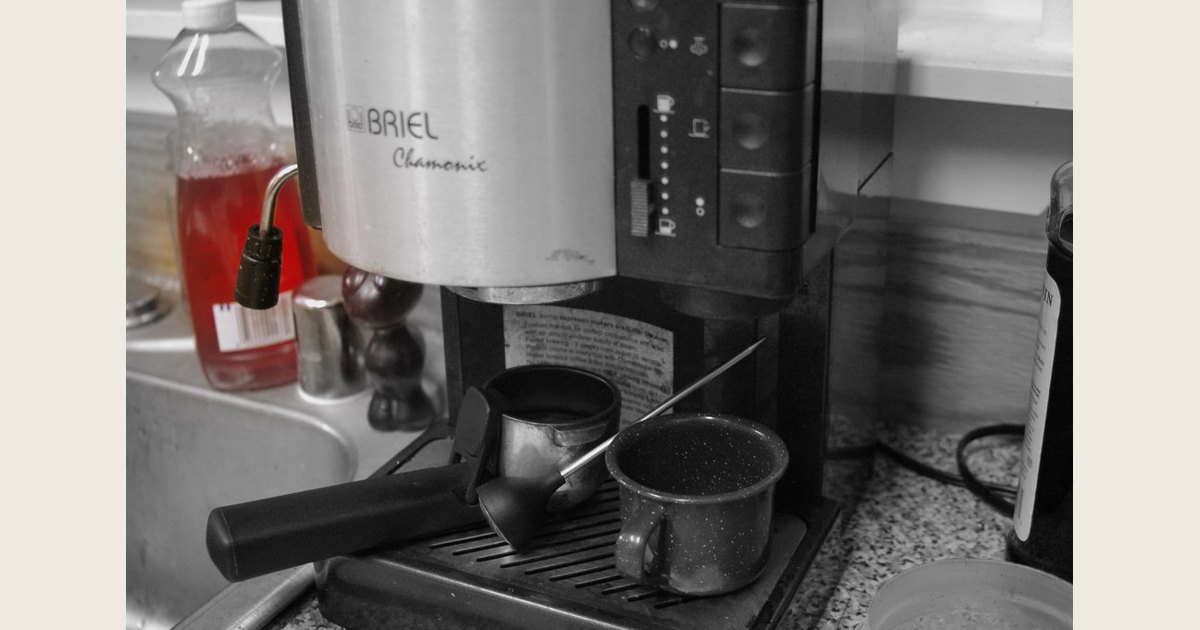
Illustrative stock: this is a different espresso machine, not the Stilosa. Its portafilter and cups show the kind of countertop setup involved in a manual coffee routine; no product testing is implied. “Espresso Machine” by justinbaeder, used under CC BY 2.0; resized.
For a first setup, identify the exact model as EC260BK and read the manufacturer’s instructions for use before operating it. Follow the manual’s directions for preparing the machine, filling it, loading a filter, and using the frother; don’t guess at priming steps or try to force a part that doesn’t fit. De’Longhi’s support page provides the EC260BK instructions in English (United States). (Stilosa support center)
A useful way to learn is to keep the coffee and dose consistent while you get comfortable with the portafilter and milk frother. Change one variable at a time rather than interpreting the 15-bar pump figure as a guarantee of flavor. Pump pressure is a listed specification, not a tasting score, and the product page doesn’t publish shot-quality test results.
Is the Stilosa a good fit for your kitchen?
Consider the Stilosa if you want a manual entry point for espresso, expect to make drinks one at a time, and don’t mind operating and cleaning the parts yourself. It has single- and double-shot filters and a manual frother; the actual setup and workflow are more hands-on than an automatic machine.
It’s a weaker fit if you want repeatable drinks at the push of a button or several milk drinks with minimal pauses. The ESE detail matters if you prefer pods: De’Longhi’s instructions say the single-shot filter is suitable for ESE pods, but they do not identify compatibility with proprietary capsule systems. If you use a capsule brand, choose a machine explicitly made for that format rather than assuming those capsules fit the Stilosa. (EC235–260 instructions)
For the missing size details, measure your counter and overhead clearance before buying.
Price and warranty: verify before checkout
De’Longhi’s US product page showed a price of $149.95 on October 24, 2026. Treat that as a dated snapshot, not a promised sale price: retailer pricing, stock, and promotions can change. Compare the current price with the cost of the coffee and any grinder you might add, and confirm return terms with the seller.
Check warranty coverage directly before you buy. The product description states “1 Year Warranty + 1 year with product registration,” while a banner on the same page says “Industry Leading 3 Year Warranty Included.” The page doesn’t explain the discrepancy. Don’t assume which statement applies to your purchase; ask De’Longhi or the retailer to confirm the coverage, registration deadline, and any conditions in writing. (De’Longhi product page)
Cleaning and simple troubleshooting
Routine care matters with any espresso machine, but the exact sequence and descaling interval should come from the instructions for the EC260BK. De’Longhi links its manual from the model support page. Follow that guide for cleaning the parts, frother care, and descaling; avoid improvising cleaners or opening the machine. For a general overview of the descaling process, see Counter and Kettle’s espresso-machine descaling guide, then use the Stilosa instructions for model-specific steps.
If a first shot doesn’t flow as expected, pause and check the basics in the manual: correct setup, water, filter placement, and whether the portafilter is assembled as shown. Don’t force the handle or attempt an electrical repair. If coffee runs through too quickly, note the coffee and preparation you used before changing anything; a grinder can make grind adjustments possible, while pre-ground coffee limits that control. For milk, clean the frother promptly as directed and check that it is being operated according to the manual. If the issue persists, use De’Longhi support rather than experimenting with internal parts.
Bottom line
The De’Longhi Stilosa EC260BK is worth considering as a manual, relatively straightforward way to get into portafilter espresso—provided you’re willing to handle the preparation, frothing, and cleanup yourself. Its included filters, tamper, and manual milk frother make the feature list approachable, but the grinder is not included and important details such as dimensions and tank capacity weren’t specified on the product page reviewed.
Choose it if learning a hands-on routine matters more than automation and the documented ESE-pod option suits your coffee habits. Look at a fully automatic machine for push-button convenience, or a capsule machine designed for your specific capsule format. Before ordering, confirm the current price and warranty directly with the seller or manufacturer; De’Longhi’s page reviewed showed inconsistent warranty language.
Frequently asked questions
Does the De’Longhi Stilosa come with a grinder?
A grinder is not included in De’Longhi’s listed box contents. You’ll need suitable pre-ground coffee or a separate grinder; a grinder is useful if you want to adjust grind size as part of your espresso routine. (What’s included)
Can the Stilosa make milk drinks?
The product page lists a manual milk frother and describes the machine for espresso and milk drinks, including latte and cappuccino. You’ll need to texture the milk yourself rather than select an automatic milk-drink program. Follow the model’s instructions for using and cleaning the frother. (De’Longhi product page)
Is the Stilosa suitable for a small counter?
De’Longhi describes it as compact, but the product page reviewed does not state dimensions. Measure your available counter space and consult the manual for the model’s actual dimensions and operating clearance before buying.
Does the Stilosa work with coffee pods?
Yes, for ESE pods: De’Longhi’s instructions identify the single-shot filter as suitable and show how to center a pod in it. That does not mean proprietary capsules fit; check the packaging for ESE compatibility and don’t force a capsule into the portafilter. (EC235–260 instructions)
What warranty does the Stilosa have?
The product description says one year plus one year with product registration, but a banner on the same page advertises a three-year warranty. Because the page doesn’t reconcile these statements, confirm the warranty for the exact model and purchase channel with De’Longhi before checkout.