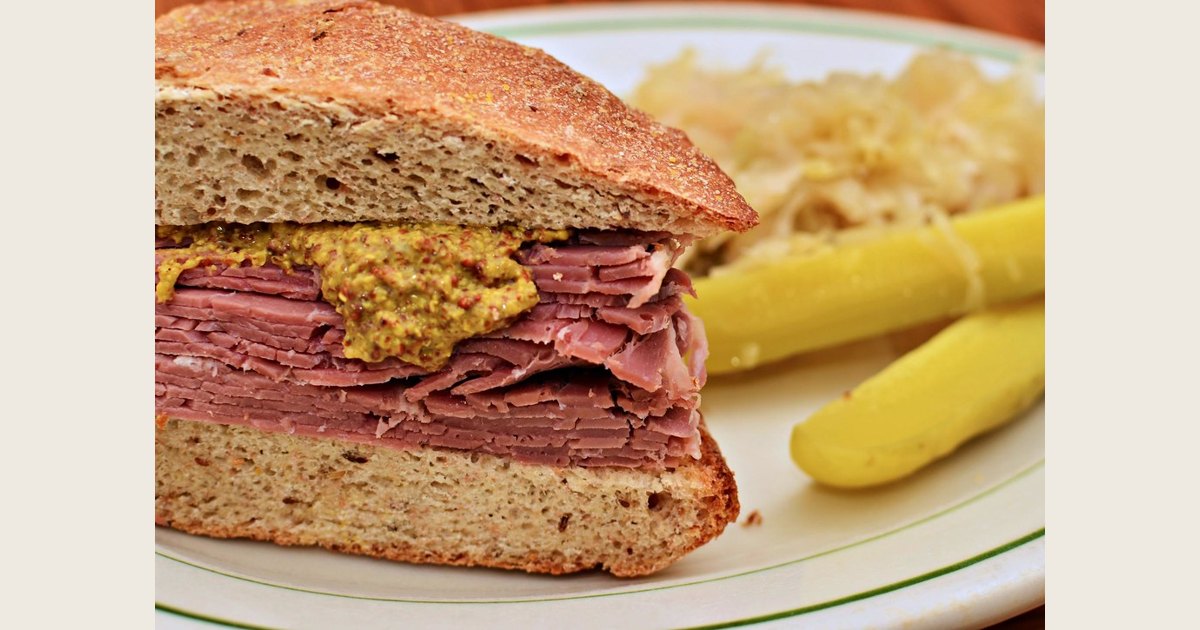
Featured image: An illustrative corned-beef photo, not a record of this recipe. Photo: Mmm… corned beef by jeffreyw, licensed under CC BY 2.0. Resized and padded. Illustrative stock photo; no product testing is implied.
Timing depends on brisket size, thickness, and cooker. McCormick’s recipe uses a 4-pound brisket in a 6-quart cooker, cooked 7 hours on HIGH, then adds cabbage for 1 to 2 hours. Taste of Home gives a separate 8 to 9 hours on LOW for a 2½- to 3-pound brisket, halved, in a 6- to 7-quart cooker. Treat each as a starting point for similar conditions—not a universal hours-per-pound rule or a direct HIGH-to-LOW conversion.
Use a thermometer for safety and a tenderness test for texture. The FDA lists 145°F with a 3-minute rest for beef roasts and says color and texture are unreliable ways to judge meat safety. A tenderness check may call for more cooking after the roast has reached that safety temperature. FDA’s safe food handling guidance supports the temperature, rest, thermometer, thawing, and leftover-safety advice below.
Quick answer: For a brisket and cooker similar to the cited recipes, start with 7 hours on HIGH for a 4-pound brisket, adding cabbage for 1 to 2 hours, or 8 to 9 hours on LOW for a halved 2½- to 3-pound brisket. These are recipe-specific estimates; verify temperature and tenderness rather than relying on time alone.
Jump to: Timing table · Cooker setup · Doneness checks · Slicing · Leftovers
Key takeaways
- Match the timing reference to the brisket size, cooker capacity, and setting; neither recipe establishes a universal conversion.
- Check safety with a food thermometer and texture with the recipe-specific knife test described below.
- Keep raw meat separate; refrigerate leftovers promptly and reheat them to 165°F.
Start with the right timing plan
Corned beef is usually sold as a cured brisket. Weight matters, but thickness and cooker capacity also affect how long it takes. Use a published recipe close to your brisket’s size and setting rather than applying an hours-per-pound conversion.
| Recipe reference | Brisket and cooker | Published schedule |
|---|---|---|
| McCormick Kitchens | 4-pound brisket; 6-quart cooker | HIGH 7 hours, then add cabbage and cook HIGH 1 to 2 hours more; water just covers meat |
| Taste of Home | 2½- to 3-pound brisket, cut in half; 6- to 7-quart cooker | LOW 8 to 9 hours |
These are recipe-specific starting points, not a comparison proving that LOW always takes a set number of hours longer than HIGH. The Taste of Home recipe says a knife tip should glide through the beef when tender. If your brisket is thicker or your cooker differs, allow extra time and check the result rather than assuming the published schedule is exact.
For a broader primer on capacity, heat settings, and lid use, see our guide to how to use a slow cooker. Don’t use a time chart as a substitute for checking the cooked brisket.
Set up the slow cooker
Start with a thawed brisket. The FDA says not to thaw food on the counter; thaw in the refrigerator, cold water, or the microwave. Cook food thawed in cold water or the microwave immediately.
- Wash hands, produce, and equipment. Wash hands with warm water and soap for at least 20 seconds before and after handling food. Keep raw meat separate from produce and other ready-to-eat foods. Clean the board, knife, sink area, and any plate that held raw meat with hot, soapy water.
- Build a vegetable base. Put potatoes, carrots, and quartered onion in the bottom of a 6-quart slow cooker. They can support the brisket and cook in the liquid beneath it.
- Add the brisket and flavorings. Set the corned beef over the vegetables. Use the seasoning packet if your package includes one, or use pickling spice and garlic as the cited recipe does. Follow your brisket package’s preparation directions if they differ.
- Add liquid and cover. For the cited 4-pound method, add enough water to just cover the meat—about 8 cups. Put the lid on and leave it in place while the cooker works.
- Cook, then add cabbage late. Cook the covered brisket on HIGH for 7 hours. Add cabbage wedges, replace the lid, and cook 1 to 2 hours longer, until the cabbage is tender-crisp.
Check safety and tenderness separately
Near the end of the recipe time, insert an instant-read thermometer into the thickest part of the brisket, avoiding the bottom of the cooker. The FDA’s minimum for beef roasts is 145°F followed by a 3-minute rest. A thermometer is important because the pink color of cured corned beef does not tell you whether it has reached a safe temperature.
Then test texture with the knife-tip method described by Taste of Home: a knife tip should glide through the beef. If it meets resistance, cover and continue cooking, then test again. A brisket can reach the beef-roast safety minimum yet still need more cooking to become tender; time and temperature do not replace this texture check.
Rest, slice, and serve
Once the brisket has reached the safety temperature and is tender, move it to a clean platter or cutting board. Rest it for at least 3 minutes before slicing, consistent with the FDA’s rest-time guidance for beef roasts. The pause also gives you a chance to arrange the vegetables and identify the grain.
Look for the long, parallel lines of muscle fiber on the cut surface. Slice across those lines, not along them. Keep the slices thin, as the cited recipe instructs. If the cut seems chewy, first check that you have sliced across the grain; if it was sliced correctly and is still tough, return the remaining brisket to the cooker with liquid and continue cooking until a knife tip glides through it.
The cooking liquid can be served with the meat and vegetables if desired. Use a clean ladle or spoon—not the utensil used on raw meat—and do not return cooked food to a plate that held the raw brisket unless the plate was washed. Keep the lid on as much as possible so the cooker can maintain its heat.
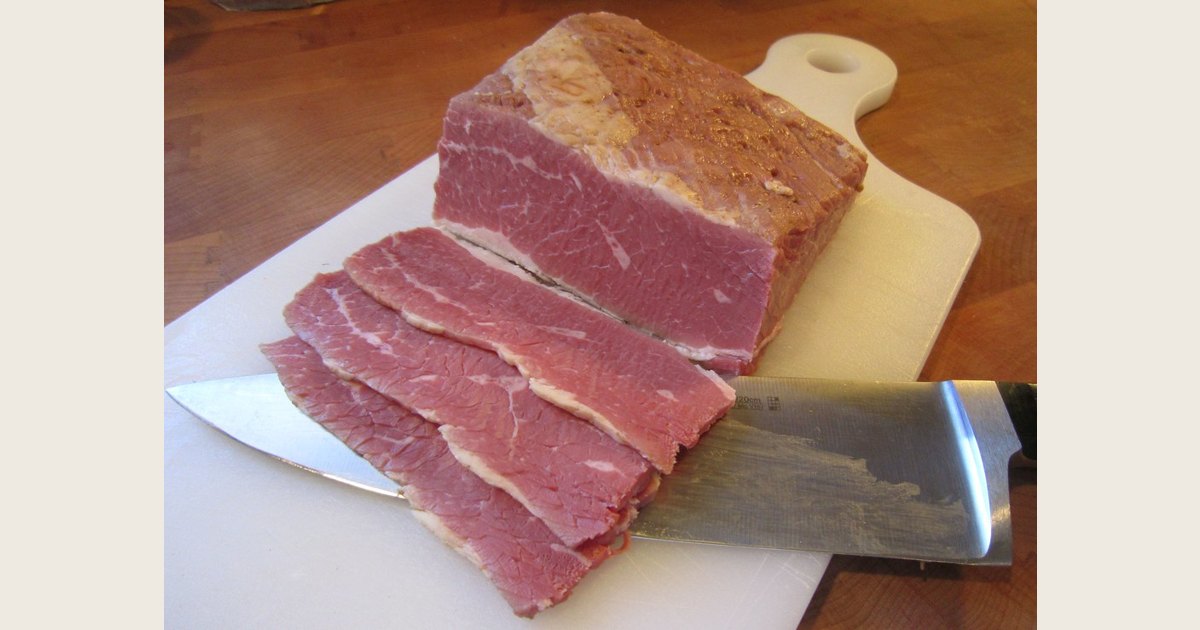
Photo: Home-Made Corned Beef by syvwlch, licensed under CC BY 2.0. Resized and padded. Illustrative stock photo; no product testing is implied.
Use the cut face to find the direction of the muscle fibers before making thin slices across them. This photograph illustrates slicing, not the cited cooking schedule or a temperature reading.
Troubleshooting common corned beef problems
The brisket is still firm
Taste of Home’s corned-beef recipe describes doneness this way: “A knife tip should glide through the beef.” If the knife still meets resistance, cover and keep cooking, then test again. That texture check is separate from food safety: use a thermometer for safety, not color or tenderness.
The cabbage is too soft
Add cabbage near the end of cooking so it has less time to soften. Remove it when it reaches the texture you like.
The vegetables are not done when the meat is ready
Cut potatoes and carrots into similar-size pieces and keep them beneath the brisket, where they contact the cooking liquid. Cover and keep cooking them until tender. If you add vegetables after the brisket has cooked, they will need their own time to soften.
The meal tastes too salty
Corned beef is cured, so saltiness varies by brand and package. Taste a slice before adding extra salt to the cooking liquid or vegetables. Use the supplied spice packet or added pickling spice for flavor, but do not assume it needs additional salt.
Food safety and leftovers
Follow the raw-meat handling and thawing steps before cooking. After the meal, use the FDA’s cooling and reheating guidance:
Move leftovers into shallow containers to cool more quickly, then refrigerate or freeze them within 2 hours of cooking (within 1 hour if the temperature is above 90°F). When reheating, use a food thermometer; the FDA lists 165°F for leftovers and casseroles. Keep raw-meat utensils and plates separate from cooked food.
Frequently asked questions
Can I cook corned beef on LOW instead of HIGH?
Yes. A published recipe for a halved 2½- to 3-pound brisket in a 6- to 7-quart cooker gives 8 to 9 hours on LOW. Use that as a starting point for similar conditions, not a conversion of the 4-pound HIGH recipe. Check texture with the knife-tip test and food safety with a thermometer.
Should corned beef be covered with water in a slow cooker?
The cited 4-pound recipe calls for enough water to just cover the meat—about 8 cups in its 6-quart cooker. Follow the specific recipe you are using and avoid exceeding your cooker’s maximum-fill guidance.
When should I add cabbage?
For the McCormick HIGH-setting recipe, add cabbage after the first 7 hours and cook 1 to 2 hours longer, until tender-crisp. Other recipes may use different schedules.
Does 145°F mean corned beef is tender?
No. That is the FDA’s safe minimum for beef roasts with a 3-minute rest. Use the knife-tip test to check corned-beef tenderness; continue cooking if the knife meets resistance.
The practical finish line
Choose a published schedule that matches your brisket and cooker, then check safety and texture separately. Rest beef at least 3 minutes after it reaches 145°F, slice thinly across the grain, and chill leftovers promptly.