You can grind coffee beans without a grinder with a blender, food processor, mortar and pestle, rolling pin, hammer, or meat mallet. The results will be less even than a burr grinder, but can work for drip coffee, pour-over, French press, or cold brew. Start with a small batch and stop before the grounds become powdery.
Key Takeaways
- A mortar and pestle gives the most control for a small serving; a blender or food processor is faster for a larger batch.
- Use short pulses or light, repeated strikes. Long blending or one hard blow creates a mix of powder and large pieces.
- Aim coarse for French press and cold brew, medium for drip coffee, and medium-fine for many pour-over brewers.
- Improvised tools are a poor fit for espresso, which needs a very fine, unusually even grind.
- If you brew coffee only occasionally or are happy with pre-ground coffee, you may not need to buy a grinder.
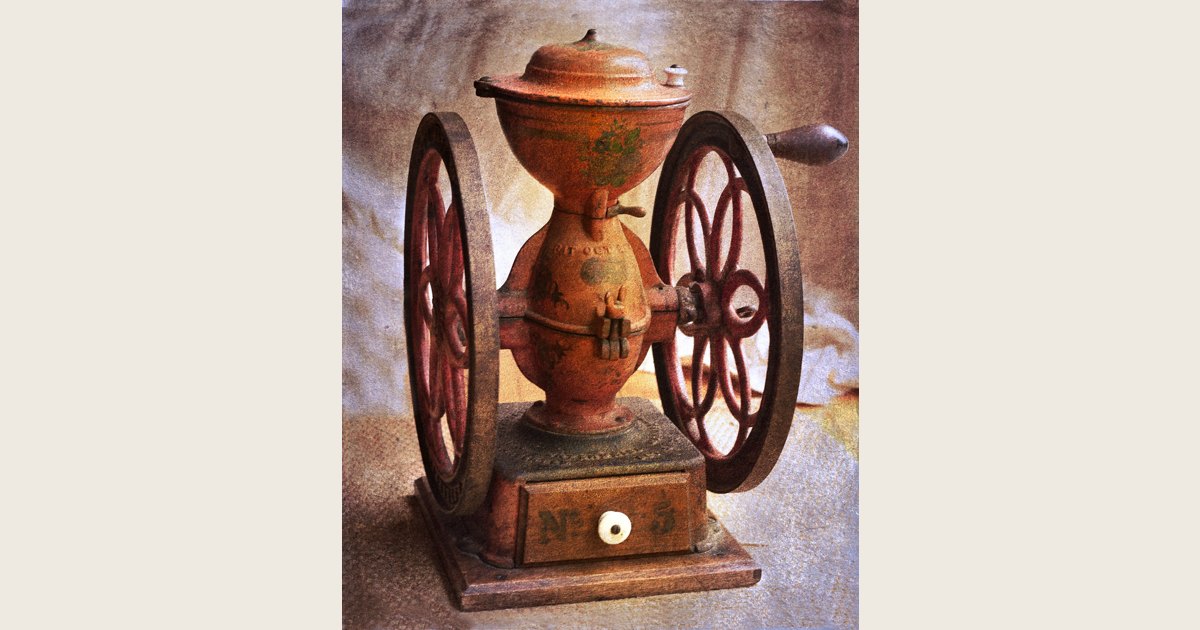
Photo: Coffee grinder by Muffet, licensed under CC BY 2.0. Resized and padded. Illustrative stock photo; no product testing is implied.
First, aim for a usable texture, not perfect uniformity
The goal is to avoid extremes: a pile full of dust can taste harsh or muddy, while many large fragments can make a cup seem thin or weak. Work in small amounts so you can check the texture as you go.
The right target depends on how you brew. The National Coffee Association identifies drip, espresso, cold brew, French press, and pour-over as distinct common brewing methods, and notes that brewing choices affect flavor and quality (National Coffee Association, “Brewing”).
Before using any tool, make sure it is clean, dry, and free of lingering spice, onion, detergent, or meat residue. Put only the beans you expect to brew into the tool or bag.
Six ways to grind coffee beans without a grinder
Choose the method based on the amount of coffee you need and the texture you are trying to reach. A blender and food processor are quickest, while manual methods make it easier to stop at a coarse texture.
1. Use a blender for speed
A blender works best when you need enough coffee for several cups and can accept some unevenness.
- Add a small amount of beans to a dry jar. Do not fill it close to the top.
- Pulse for one or two seconds at a time.
- Shake the closed jar gently between pulses.
- Check the texture often and stop when most pieces suit your brewer.
Do not run the blender continuously. Short pulses help prevent a lot of fine powder before larger pieces break down. A blender is more suitable for drip or cold brew than a precise pour-over.
2. Use a mortar and pestle for the most control
A mortar and pestle is a strong choice for one or two cups because you can see and feel the beans as they break. It is also one of the easiest methods for keeping the result relatively coarse.
- Add enough beans to loosely cover the mortar’s bottom.
- Press and twist the pestle to crack them.
- Gently pound any whole beans, then press and rotate again.
- Sweep grounds toward the center and stop when the texture is right.
This takes time, but it helps prevent over-crushing. Work in batches if the mortar is small.
3. Crush beans with a rolling pin
A rolling pin is a practical option when you have a sturdy food-safe zip-top bag and a solid work surface. It produces a coarse to medium grind and requires no appliance.
- Put beans in a heavy zip-top bag, press out most air, and seal it. Double-bag if needed.
- Lay the bag flat on a cutting board or folded kitchen towel.
- Press with the rolling pin to crack the beans, then roll in several directions.
- Gather the beans into a flat layer, check the texture, and repeat with gentle passes.
Keep the bag flat on a stable surface. This method suits French press or cold brew, where a coarse, irregular texture is acceptable.
4. Pulse beans in a food processor
A food processor is similar to a blender but its wider bowl can make it easier to process a modest batch. It is best for medium or coarse grounds, not for a highly consistent fine grind.
- Fit a clean, dry blade and bowl, then add a small batch of beans.
- Pulse briefly several times instead of holding the button down.
- With the machine off, shake grounds away from the sides.
- Pulse again only until the pieces are mostly the size you want.
Food processors can leave large fragments and fine dust. Use a very mixed batch with a forgiving brewer such as a drip machine or French press rather than chasing a powder-fine texture.
5. Use a hammer for an emergency coarse grind
A clean hammer can crack coffee beans when no kitchen tool is available, but it needs extra care. Keep the beans contained and use light taps, not full swings.
- Put a small batch of beans in a sturdy zip-top bag on a protected, stable surface.
- Cover it with a kitchen towel in case the bag tears.
- Tap across the bag with the flat face of a clean hammer until the beans are cracked.
- Move the bag around and repeat until few whole beans remain.
Avoid a bare countertop, a damaged hammer, or an attempt at espresso-fine grounds. This last-resort method is for a coarse brew, not uniform coffee.
6. Use a meat mallet for small batches
A meat mallet is easier to control than a household hammer because it is made for kitchen use. Use its flat side if it has one, and keep the beans inside a bag rather than placing them directly on the work surface.
- Wash, rinse, and dry the mallet thoroughly, especially after raw meat.
- Put beans in a sturdy sealed bag on a cutting board.
- Tap with the flat face, working across the bag.
- Redistribute the beans after a few taps and repeat only as needed.
A textured mallet can puncture plastic or make a very uneven result. Use the flat side and a light touch.
Match the grounds to your brew method
Use these as visual targets, not laboratory settings. Brew one cup and adjust the next batch rather than trying to get a perfect texture at first.
| Brew method | Texture to aim for | Best no-grinder options |
|---|---|---|
| French press | Coarse, with pieces similar to coarse salt | Mortar and pestle, rolling pin, meat mallet |
| Cold brew | Coarse and chunky | Mortar and pestle, rolling pin, hammer |
| Drip coffee maker | Medium, similar to ordinary sand | Blender, food processor, mortar and pestle |
| Pour-over | Medium to medium-fine, like finer sand | Mortar and pestle, careful blender pulses |
| Espresso | Very fine and even | Buy pre-ground espresso coffee or use a grinder |
If a brew drains too quickly and tastes weak, make the next batch a little finer. If it drains very slowly or leaves heavy silt, make it a little coarser. Change one thing at a time.
Why espresso is the exception
Espresso is the least forgiving use for improvised grounds. Its short brew time and pressurized water make particle size and consistency more important than with French press or cold brew. A blender, rolling pin, or mallet can make dust alongside large pieces, leading to uneven flow through the coffee puck.
The Specialty Coffee Association’s standards catalog separately includes home coffee grinders, home coffee brewers, and semi-automatic and automatic espresso machines (Specialty Coffee Association, “Standards”). A kitchen workaround can make coffee, but it is not a reliable substitute for fine espresso adjustment.
If espresso is your regular drink, buy coffee pre-ground for espresso from a seller that can grind it to order, or use a suitable grinder. For occasional coffee, choose a more forgiving brewer.
Troubleshoot the cup, not just the grounds
A little variation is normal with every no-grinder method. Use the brewed coffee to guide the next adjustment.
- Too much sediment in the cup: Use a coarser texture. For a French press, pour slowly and leave the last bit in the carafe.
- Weak or watery coffee: Make the next batch slightly finer, or use a bit more coffee.
- Bitter, harsh, or muddy coffee: Your batch may contain too much powder. Use fewer pulses or lighter strikes.
- Whole beans remain: Move large pieces to the center or crush them separately instead of pulverizing the entire batch.
- Coffee tastes like the tool: Clean and dry the equipment more thoroughly. Avoid tools that cannot be fully cleaned after use with spices or raw meat.
When you do not need to buy a grinder
You do not need a grinder just because you bought whole beans. Pre-ground coffee is practical if you brew infrequently, serve guests now and then, or want less equipment. A rolling pin, mortar and pestle, or brief blender session can cover the occasional bag of beans.
A grinder becomes more useful when you want consistent results, switch among brew methods, make pour-over regularly, or prepare espresso. Until then, choose the workaround that fits the coffee and keep the batch small.
Frequently asked questions
Can I use a spice grinder for coffee beans?
Yes. A clean, dry blade-style spice grinder can break down coffee beans. Clean it carefully first because spices can leave strong flavors behind.
Should I use a blender or food processor?
Choose the blender for a quick small-to-medium batch and the food processor for a wider bowl. Use short pulses and check frequently. Neither is ideal for espresso.
Can I crush beans the night before?
You can. Store unused grounds in a sealed container away from heat, moisture, and strong odors.