For fluffy jasmine rice on the stovetop, start with 1 cup rice and 1¾ cups water or broth. Bring it to a boil, cover, simmer gently for 15 minutes, then take the pot off the heat and leave it covered for 10 minutes before fluffing. Those measurements and times follow the stovetop directions for Lundberg white jasmine rice; use the instructions on your own rice package if they differ. Lundberg’s directions also use that liquid ratio for a rice cooker.
The keys are modest: measure the liquid, keep the lid on once the rice simmers, and let the finished rice rest. Jasmine rice should be tender and aromatic, with grains that separate when you fluff them—not dry and hard, but not swimming in moisture either.
Key takeaways
- Start with 1 cup jasmine rice to 1¾ cups water for the stovetop method below.
- Rinsing is optional; if you rinse, drain the rice very well before measuring the cooking liquid.
- After the timer ends, leave the lid closed for 10 minutes. The rest is part of the method, not idle time.
- For a rice cooker, follow its manual or water-line markings first. If it gives no different direction, start with the same ratio.
- Change one thing at a time when troubleshooting, so you can tell what improved the next batch.
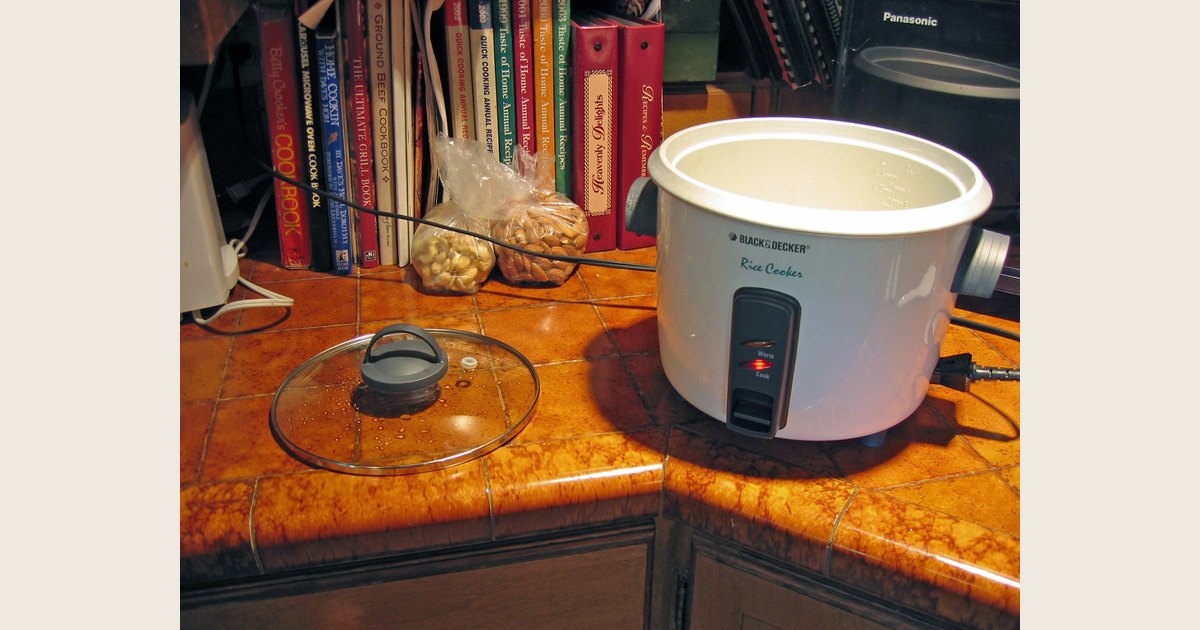
Featured-image credit: Photo: Rice Cooker by alex.shultz, CC BY 2.0. Resized and padded. Illustrative stock photo; no product testing is implied.
Jasmine rice water ratio at a glance
Use this as a dependable starting point for plain white jasmine rice:
| Method | Rice | Water or broth | Cooking approach |
|---|---|---|---|
| Stovetop | 1 cup | 1¾ cups | Simmer 15 minutes; rest covered 10 minutes |
| Rice cooker | 1 cup | Follow the machine’s line or manual; otherwise begin with 1¾ cups | Use the program your manual specifies |
For a larger pot, double the ingredients: 2 cups rice and 3½ cups liquid. Do not try to make the texture more “fluffy” by adding extra water. The ratio is the first control to keep consistent.
A package can reasonably call for a different ratio because rice varieties, processing, altitude, cookware, and cooker designs vary. That is why the most specific instruction—the one on the bag or in the appliance manual—wins. The Lundberg product directions list 1¾ cups liquid for 1 cup of white jasmine rice, a 15-minute low simmer, and a 10-minute covered rest. See the complete product instructions.
Decide whether to rinse or soak
Rinsing: optional, but drain well
Rinsing is a preference rather than a required step for this basic method. Lundberg’s published stovetop directions do not call for rinsing. If you like to rinse jasmine rice, put it in a fine-mesh sieve, run cool water over it, and gently move the grains with your hand. Then let it drain thoroughly.
The practical reason to be deliberate here is consistency: start the pot with drained rice and the measured amount of fresh cooking liquid. Avoid guessing how much rinse water remains in the sieve, especially for a one-cup batch. If you are making rice for the first time with a particular brand, either rinse and drain well every time or skip rinsing every time until you learn the texture you prefer.
Soaking: skip it for your first batch
You do not need to soak white jasmine rice for the method on this page. Soaking adds another variable to both timing and liquid handling. If your rice package or appliance manual specifically calls for a soak, follow that instruction rather than combining it with a stovetop ratio intended for unsoaked rice.
How to cook jasmine rice on the stovetop
Use a medium saucepan with a tight-fitting lid. A pot that is much wider than it is tall can expose more liquid to evaporation, so a compact saucepan is easier to repeat.
- Measure the rice and liquid. Add 1 cup white jasmine rice and 1¾ cups water or broth to the saucepan. Add a small pinch of salt only if it suits the dish. Oil or butter is optional, not necessary for the rice to cook.
- Bring it just to a boil. Set the uncovered pan over medium-high heat. Watch for a full boil rather than walking away; a small batch can move from boiling to bubbling over quickly.
- Cover and lower the heat. As soon as the liquid boils, put on the lid and turn the burner down until the pot holds a low, quiet simmer. Lundberg specifies a tight lid and a low simmer for 15 minutes. Its stovetop instructions are here.
- Do not stir or peek. Once covered, leave the rice alone. Lifting the lid releases heat and steam, making the batch less repeatable. Set a 15-minute timer instead.
- Rest the rice, still covered. Turn off the heat and move the pot off a hot electric burner if needed. Leave the lid on for 10 minutes, as directed in the published method.
- Fluff and serve. Use a fork or rice paddle to lift and separate the grains. Taste a small spoonful before seasoning further. If the rice is tender, it is ready; if it is firm, see the troubleshooting section rather than adding a large amount of water at once.
The heat level matters as much as the timer. “Low simmer” means you should see only restrained bubbling if you briefly check at the end—not a fast boil that shakes the lid. Think of it as occasional bubbles around the rice rather than the rolling boil you would use for pasta. If your burner runs hot, use the smallest burner and reduce the heat a little sooner on the next batch.
How to cook jasmine rice in a rice cooker
A rice cooker is convenient because it handles the heating phase and usually switches to warm when its program finishes. It is not a reason to ignore the appliance’s own instructions: capacities, measuring cups, water lines, and programs vary.
- Check the manual and pot markings. If the inner pot has a line for white or jasmine rice, use the corresponding line and the amount of rice indicated by that manual. If the manufacturer gives a different ratio, use it.
- Add rinsed-and-drained or unrinsed rice. Keep the choice consistent from batch to batch. Wipe the outside of the inner pot dry before returning it to the cooker.
- Add liquid and choose the stated program. If your cooker has no relevant water line or ratio, start with 1 cup rice and 1¾ cups liquid—the same ratio Lundberg gives for its rice-cooker directions. Lundberg also says that rice still too firm at the end of cooking may need 1 to 2 tablespoons more liquid and additional cooking time.
- Let it stand briefly if your manual recommends it, then fluff. Open the lid carefully, fluff with a paddle, and serve. Do not compress the rice while fluffing.
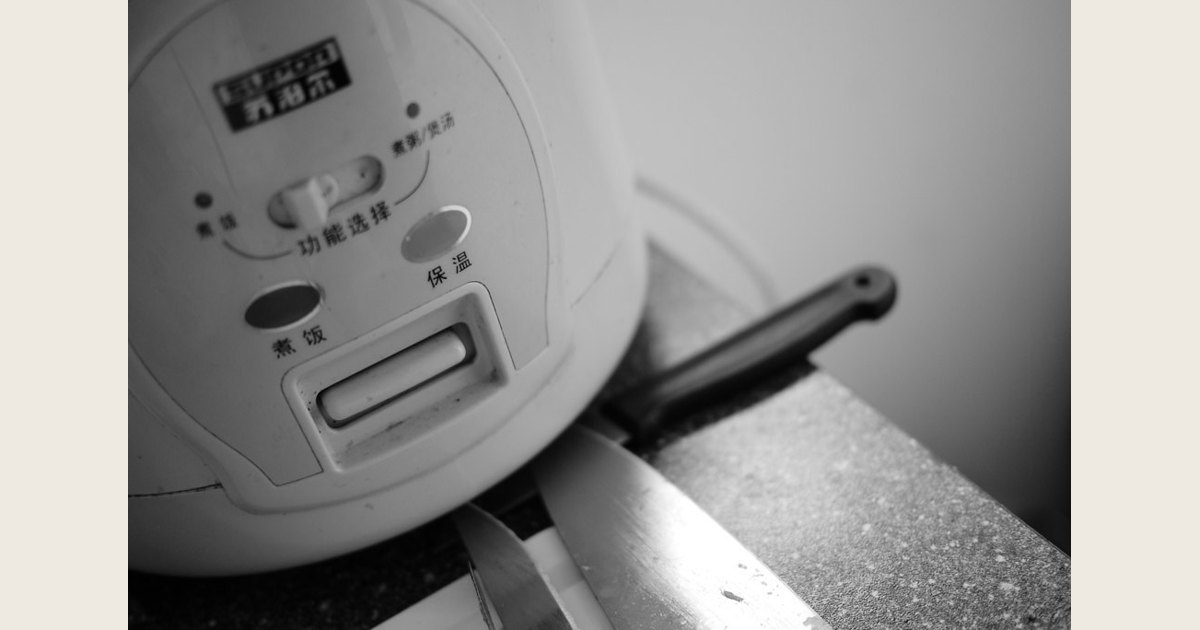
Caption: A rice cooker can automate the heating phase, but its manual and water-line markings should guide the batch.
Photo: Rice cooker by ^riza^, CC BY 2.0. Resized and padded. Illustrative stock photo; no product testing is implied.
If you are comparing appliances rather than cooking a batch today, our guide to Japanese rice cookers and the features that matter can help you evaluate settings and capacity. Once you are comfortable using the cooker, the same workflow also works for other grains; see our guide to cooking quinoa in a rice cooker for its separate water and program guidance.
Stovetop vs. rice cooker: which should you use?
Choose the stovetop when you want minimal equipment, are cooking a small batch, or need the burner free after about 15 minutes. It also gives you direct control over the simmer. The tradeoff is attention: you need to catch the boil, lower the heat, and use a lid that fits well.
Choose a rice cooker when you make rice often, want a more hands-off process, or need to keep the rice warm while you finish the rest of dinner. The tradeoff is that the machine’s markings and programming are model-specific. A generic online ratio should not override the manual that came with your cooker.
Neither method guarantees identical results across brands. Record the rice, liquid, method, and any adjustment that worked in your kitchen. That small note is more useful than changing the ratio, pan, rinse routine, and heat level all at once.
Fix jasmine rice that is mushy, dry, or scorched
Mushy or wet rice
First, compare what you used with the starting ratio: 1 cup rice to 1¾ cups liquid. For the next batch, make sure rinsed rice was well drained and that the liquid was measured rather than poured by eye. Do not stir the rice hard to “dry it out”; fluff it gently and let excess steam escape after cooking.
If the rice is already very soft, it is better suited to a bowl, soup, or a later fried-rice dish than to forcing it into separate grains. Make only one small change in the next batch, and write it down.
Dry, firm, or undercooked rice
Let the full covered rest finish before deciding the batch is dry. If it is still firm in a rice cooker, Lundberg’s directions suggest adding 1 to 2 tablespoons of liquid and cooking longer. For a stovetop batch, add a small splash of water, cover the pot, and give it gentle low heat and a short covered steam before checking again. Avoid flooding the pan with a large addition of water.
Scorched bottom
Start the timer only after the pot reaches a boil, then lower the heat promptly. A low simmer, a tight lid, and a saucepan with a heavier base make the process easier to control. When rice is done, remove the pot from a hot burner before the covered rest. Serve the unscorched rice from the top rather than scraping burnt bits into it.
Rice cooks unevenly
An uneven batch is a cue to simplify. Use a tight-fitting lid, measure the same way next time, and avoid opening the pan midway through cooking. With a rice cooker, check that the pot sits flat in the base and that you are using the program and water guidance for that appliance.
Store leftover jasmine rice safely
Cool leftovers promptly in shallow containers and refrigerate or freeze them within two hours of cooking (within one hour when the temperature is above 90°F). Keep the refrigerator at 40°F or below, and reheat leftovers to 165°F. Those are FDA safe-food-handling recommendations, not rice-specific texture advice. Read the FDA guidance.
Jasmine rice FAQ
Does jasmine rice need to be rinsed?
No. You may rinse it if that is your preference, but rinse-and-drain consistently so you can judge the ratio fairly. The cited Lundberg stovetop method does not include a rinse step.
How much does 1 cup of dry jasmine rice make?
Yield varies with the rice, ratio, and texture you prefer, so do not plan a meal around a universal exact yield. Check the package for its serving information. Lundberg lists one cup of dry rice as four to six servings under its own serving convention.
Can I use broth instead of water?
Yes. The Lundberg measurement chart lists water or broth as the cooking liquid. Choose a broth whose salt level fits the rest of the meal, then taste before adding extra salt at the table.
Can I double the recipe?
Yes, provided your pot or cooker has enough room. Start by doubling both rice and liquid—2 cups rice and 3½ cups liquid for the stovetop method—and keep the same covered rest. Watch the initial boil closely, because a fuller pot can foam up.