To cook quinoa in a rice cooker, combine 1 cup dry quinoa with 2 cups water, then use the quinoa or grain process specified for your model. Rinse only when the package directs it. When the program finishes, the seeds should be tender and show their small white germ “tails”; fluff them with a fork. This 1:2 ratio is the rice-cooker ratio published by Harvard T.H. Chan School of Public Health, The Nutrition Source (accessed 2026-09-14).
Key Takeaways
- Measure 1 part dry quinoa and 2 parts water or other cooking liquid. One cup of dry quinoa makes about 3 cups cooked.
- Packaged quinoa is usually pre-rinsed. Rinse it in a fine-mesh strainer under cool water only if its package says to do so.
- Follow the quinoa directions, capacity limit, and start procedure in your own cooker manual. There is no one button or cook time that applies to every model.
- Tender seeds with an unfurled white germ are done. Fluff with a fork, or use the 15-minute covered drying fix only for quinoa that is already too wet.
- Refrigerate cooked quinoa within 2 hours, use refrigerated leftovers within 3 to 4 days, and reheat leftovers to 165°F.
Rice-Cooker Quinoa: Step by Step
This is the complete workflow for a basic 1-cup batch. The only equipment-specific part is selecting and starting the cooking program, so defer to the instructions for the rice cooker on your counter.
- Measure 1 cup of dry quinoa. This amount will make approximately 3 cups of cooked quinoa. Use a dry measuring cup so the 1:2 quinoa-to-liquid ratio stays accurate.
- Check the package for rinsing directions. Packaged quinoa is commonly pre-rinsed, but some brands direct you to rinse it to remove remaining bitter saponins. If rinsing is directed, put the seeds in a fine-mesh strainer and rinse under cool water for a few passes.
- Drain the quinoa well. Let the rinse water run off before the quinoa goes into the cooker pot. This prevents rinse water from accidentally changing the measured liquid amount.
- Add the quinoa and 2 cups water. Water is the simple baseline. Stock and dried herbs or spices are alternatives when they suit the dish. Do not exceed the fill limit in the cooker manual.
- Select the manufacturer-directed process and start the cooker. Choose a quinoa program if your manual provides one. If it directs quinoa to another specific grain program, use that named process instead. Do not assume that a white-rice, brown-rice, mixed-grain, or keep-warm control means the same thing on every machine.
- Check the quinoa when the program is complete. Taste a seed. It should be tender, and a little white germ should have unfurled into a curled tail around the seed.
- Fluff with a fork. Gently separate the cooked seeds rather than stirring them heavily with a spoon.
- Correct excess moisture only if needed. If the quinoa is fully cooked but too wet, drain it in a strainer, return it to the pot, cover it, and let it sit for 15 minutes. Harvard specifically recommends this drying correction for cooked quinoa that is too wet (The Nutrition Source, accessed 2026-09-14).
Measure the Ratio and Scale It
The reliable starting ratio is 1 part dry quinoa to 2 parts liquid. Harvard says that 1 cup dry quinoa yields about 3 cups cooked and that quinoa uses the same ratio in a rice cooker (The Nutrition Source, accessed 2026-09-14).
| Dry quinoa | Water or other cooking liquid | Approximate cooked yield |
|---|---|---|
| 1/2 cup | 1 cup | 1 1/2 cups |
| 1 cup | 2 cups | 3 cups |
| 2 cups | 4 cups | 6 cups |
Multiply both ingredients equally when you need more quinoa. Before choosing the 2-cup batch, confirm that the measured quinoa and liquid stay within your cooker’s grain and liquid capacity guidance. A cooker can have a different maximum for rice or grains than its total bowl volume.
The ratio works with water, stock, or another cooking liquid. Water makes it easier to season the finished quinoa for different meals; stock, herbs, or spices can add flavor during cooking. If a quinoa package gives a product-specific liquid instruction, use that instruction with the appliance manual rather than trying to combine conflicting directions.
Rinse Only When the Package Calls for It
Rinsing is conditional, not automatic. Quinoa’s natural outer coating contains bitter-tasting saponins. Processing usually removes that coating before packaging, which is why Harvard says packaged quinoa is usually pre-rinsed, though some brands still advise rinsing (The Nutrition Source, accessed 2026-09-14).
When the package says to rinse, use a fine-mesh strainer. Quinoa seeds are small enough to pass through many colanders. Hold the strainer under cool running water for a few passes, then let it drain thoroughly. No extra soaking time or fixed water adjustment is needed in this method.
If a package identifies the quinoa as pre-rinsed and provides no rinsing instruction, proceed to measuring and cooking. That keeps preparation simple without disregarding the brand’s directions.
Choose the Rice Cooker Program for Your Model
Use a quinoa setting when the manufacturer provides one. Otherwise, follow the exact grain program or process the manual names for quinoa. This article deliberately does not assign a universal setting, automatic shutoff behavior, or cooking time because those controls vary by appliance.
This distinction matters more than the label on a button. One cooker may include a quinoa or multi-grain program, while another may give quinoa directions in its manual without a dedicated setting. A third may not address quinoa at all. In the last case, check the manufacturer’s support materials for the exact model before choosing a program. The measured ratio is general quinoa guidance; operation, capacity, and safety instructions come from the appliance maker.
Do not use keep-warm as a cooking substitute. It is a holding mode, not evidence that quinoa has cooked through. Let the manufacturer-directed process finish, then assess doneness by tasting a seed and looking for the unfurled germ.
Check Doneness and Fix Texture Problems
Done quinoa should be tender, with the little white germ unfurled around the seed. Harvard identifies this visible “tail” as a sign that quinoa is fully cooked and recommends fluffing it with a fork (The Nutrition Source, accessed 2026-09-14).
The quinoa is too wet. Use the drain-and-rest correction in the step-by-step method: drain the cooked quinoa, return it to the pot, cover it, and wait 15 minutes. It is a remedy for a wet, cooked batch, not an extra resting rule for every batch.
The seeds are not tender. Recheck the dry-quinoa and liquid measurements and make sure the intended cooking program completed. For a repeat batch, consult the model-specific quinoa guidance rather than adding a blanket number of minutes. A cooker error message, scorching, or an unexpectedly short cycle is also a reason to use the troubleshooting instructions for that exact appliance.
The quinoa tastes bitter or soapy. Remaining saponins can cause bitterness. On the next batch, follow the package’s rinsing instruction with a fine-mesh strainer and cool water (The Nutrition Source, accessed 2026-09-14).
Pick a Color for the Dish You Are Making
White and yellow quinoa have the mildest flavor. Red and black quinoa are more earthy and tend to hold their shape better than lighter-colored quinoa, according to Harvard (The Nutrition Source, accessed 2026-09-14).
Choose white or yellow quinoa for a mild grain bowl or a recipe where you want the other ingredients to lead. Choose red or black quinoa when a more distinct texture and earthier flavor fit the dish. The color is a flavor and texture choice, not a reason to invent a different cooker program.
Cool, Store, and Reheat Leftover Quinoa Safely
Treat cooked quinoa as a leftover that needs prompt chilling. The U.S. Department of Agriculture Food Safety and Inspection Service says to refrigerate or freeze cooked leftovers within 2 hours, or within 1 hour when the temperature is above 90°F. For a large batch, divide the quinoa among shallow containers so it cools faster in the refrigerator (Leftovers and Food Safety, USDA FSIS, accessed 2026-09-14).
Use refrigerated leftovers within 3 to 4 days. Freeze quinoa you will not use in that time. Reheat cooked leftovers to 165°F, checking with a food thermometer. These are general cooked-leftover instructions from USDA FSIS, so they apply to refrigerated cooked quinoa without assuming anything about the rice cooker used to prepare it (Leftovers and Food Safety, USDA FSIS, accessed 2026-09-14).
Portioning cooled quinoa before refrigerating also makes future meals easier. Reheat only the amount you plan to eat, then use it in a grain bowl, salad, soup, or side dish.
A Rice Cooker Is Optional
A rice cooker is convenient when its manual supports quinoa, but it is not a special piece of equipment you need to buy. Harvard’s stovetop approach is to bring quinoa and liquid to a boil, reduce the heat to low, cover, and simmer for about 15 minutes or until tender (The Nutrition Source, accessed 2026-09-14).
For either method, the essentials are straightforward: measure the 1:2 ratio, follow the package’s rinsing instructions, cook until tender with the germ visible, and fluff before serving. Quinoa also provides about 8 grams of protein and 5 grams of fiber per cooked cup; it is naturally gluten-free and a complete protein (The Nutrition Source, accessed 2026-09-14).
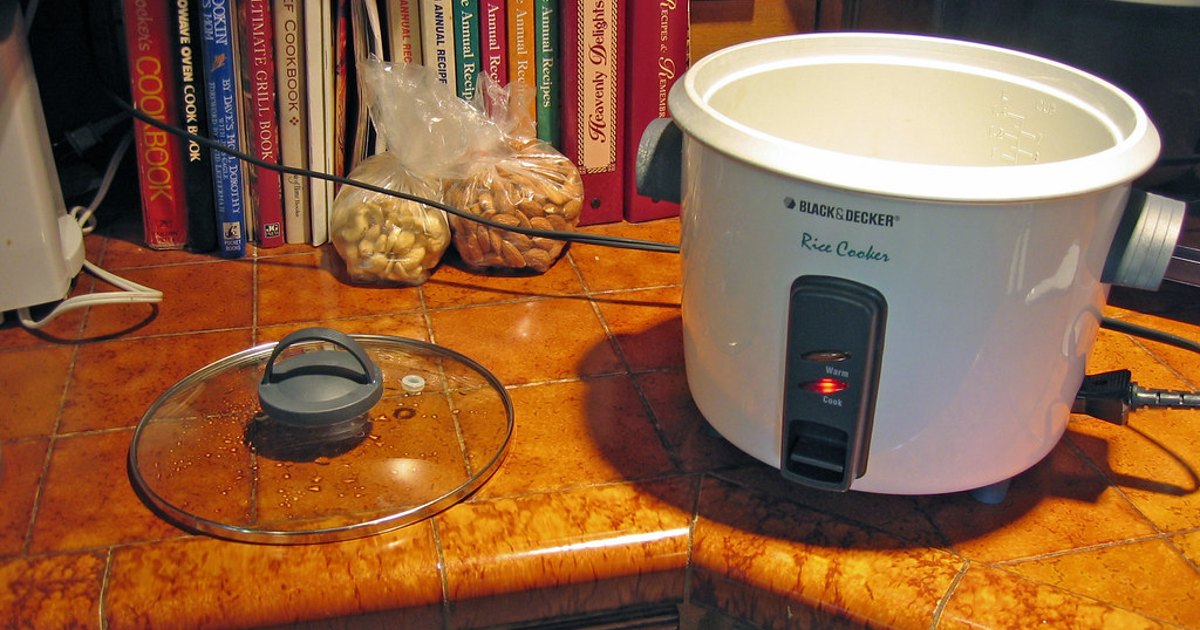
Image credit: Photo “Rice Cooker” by alex.shultz, via Flickr, licensed under CC BY 2.0. Resized and cropped. Illustrative stock photo; no product testing is implied.